
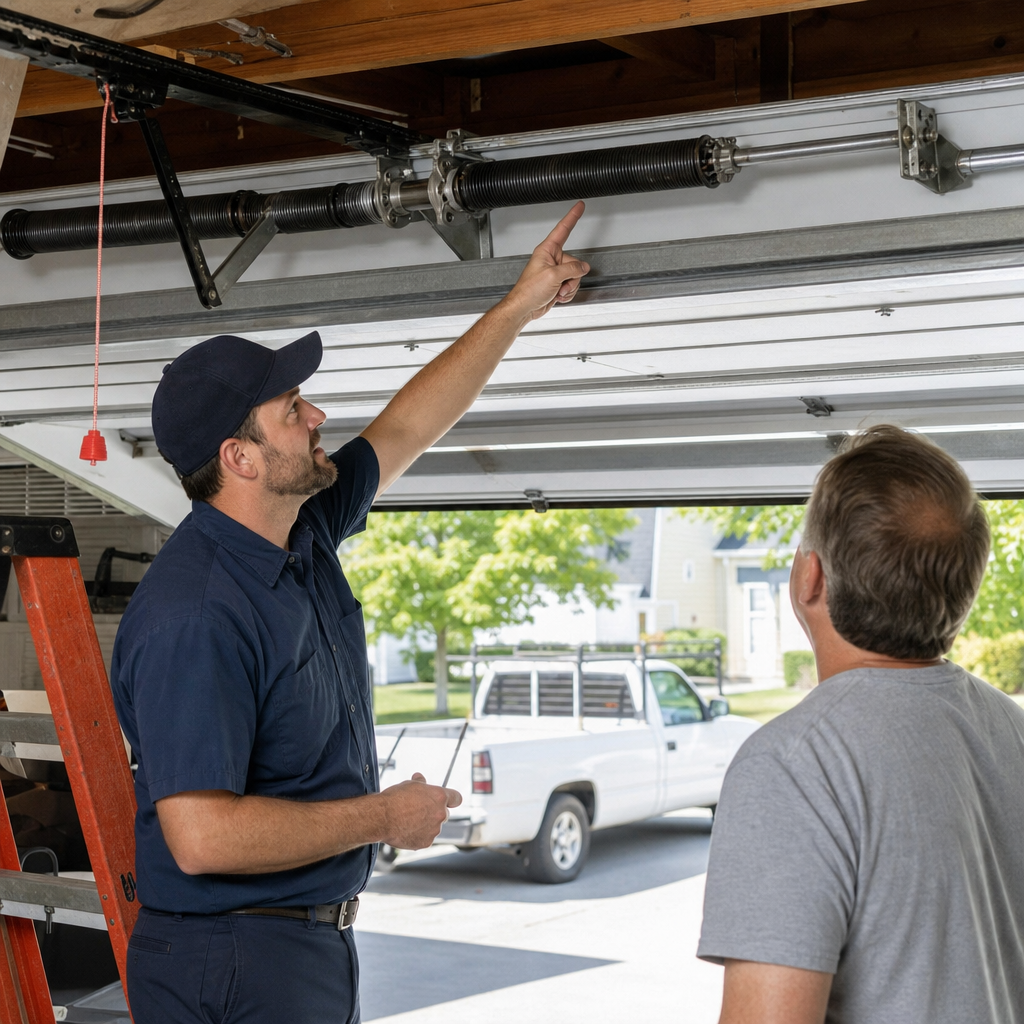
How to Program a Garage Door Opener in Georgia — And Why the Instructions Don’t Tell You the Full Story
Programming a garage door opener requires pressing the Learn button on the motor unit, then pressing your remote button within 30 seconds before the rolling-code window expires. If you’ve done this and the door still won’t respond, the problem is usually radio frequency interference from neighboring openers, a coiled antenna wire blocking signal, or an expired synchronization window — not user error. In Georgia’s dense subdivisions, where three houses on the same street might all run LiftMaster 8355 units, frequency overlap is the hidden culprit that instruction manuals never address. If you’re stuck mid-process, our Emergency Garage Door Opener in Georgia, GA team can walk you through it or come sort it out — call (844) 950-3304.
Why Georgia’s Housing Stock Makes Opener Programming Trickier Than It Looks
Georgia’s explosive growth between 2000 and 2015 left us with thousands of HOA-regulated neighborhoods — think Johns Creek, Alpharetta, Suwanee, and the newer corridors around McDonough — where builders installed the same few opener models across entire streets. Larry Peterson, Owner & Lead Technician at Sequoia Garage Door Repair Georgia, has spent 17 years crawling through attics and garages from Decatur to Stone Mountain, and he’s seen the same pattern repeat: a homeowner in a Lawrenceville subdivision follows the Chamberlain manual to the letter, yet their new remote won’t pair because the neighbor’s identical unit is broadcasting on the same frequency band. If you’re dealing with this, our Best Garage Door Opener in Georgia, GA options include models with better frequency management.
The clay-heavy soils and summer humidity around Georgia also matter more than you’d expect. Moisture infiltration into older motor housings — common in garages that aren’t climate-controlled — corrodes the circuit board contacts where the Learn button lives. We’ve opened LiftMaster housings in Dunwoody where the button itself worked fine, but the underlying solder points had degraded enough to drop the signal intermittently. That’s not a programming problem; it’s a hardware problem wearing a programming mask.
Here’s what separates a quick fix from a service call:
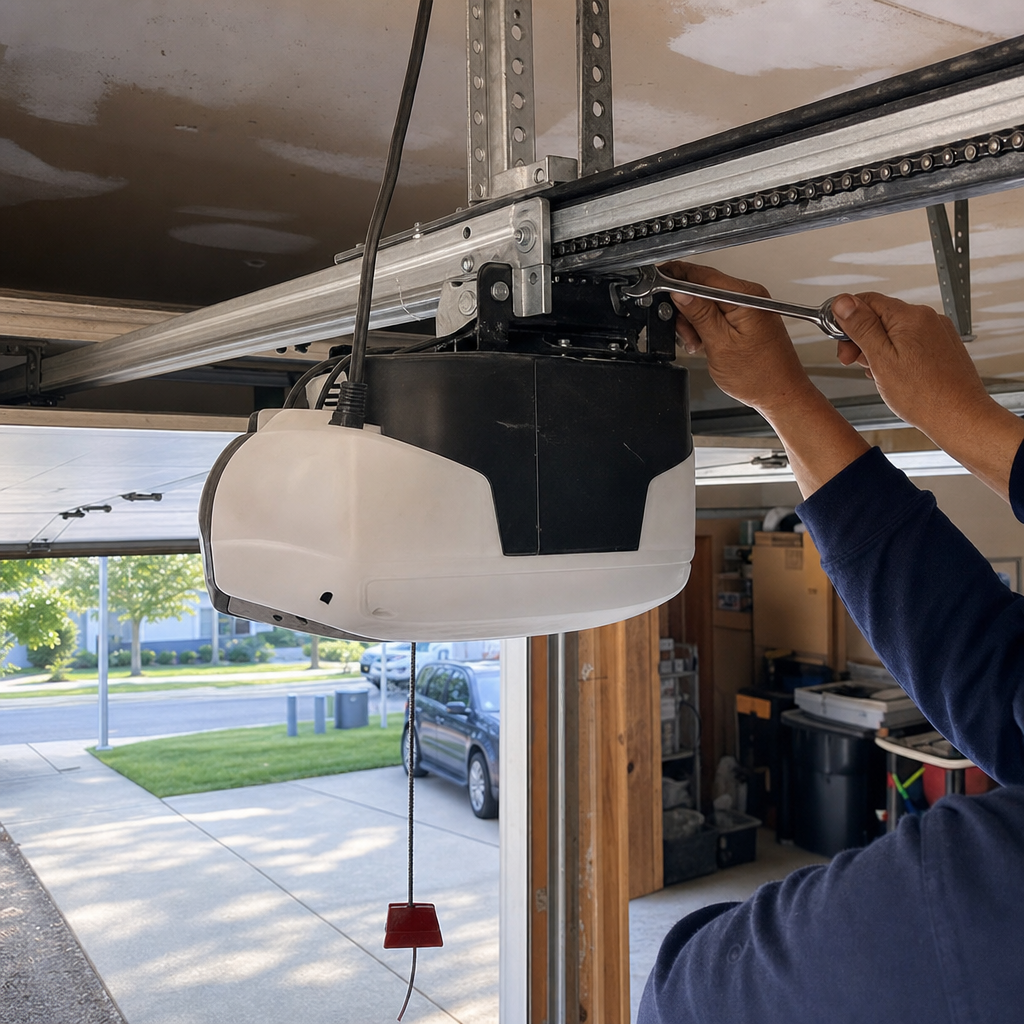
- Physical access to the Learn button: On LiftMaster 8365 and 8355 units — the workhorses of Georgia’s 2005–2015 construction boom — the button hides behind the light cover on the motor housing, not on the exterior. Many homeowners never find it because they’re looking for an external panel.
- 30-second rolling-code window: Security+ 2.0 and Genie Intellicode systems generate a new code with each use. The Learn mode stays active for roughly 30 seconds; exceed that, and the remote and opener fall out of sync permanently until you restart the sequence.
- HomeLink’s hidden two-stage process: Vehicle-integrated systems require training the car first, then training the opener — reversing the intuitive order. Most Georgia drivers we meet don’t know this second step exists.
- Antenna position: That dangling wire from the motor unit? It should hang straight down, never be coiled or tucked against the housing. A five-second adjustment fixes “programmed but no range” complaints more often than replacing the remote.
Three Programming Scenarios, Three Different Failure Points
Not all programming jobs are the same, and treating them identically is where the frustration starts. We’ve handled enough calls across Georgia to know which scenario you’re dealing with before you finish describing it.
New Remote to Existing Opener
Start with the opener’s motor unit unplugged for 30 seconds to clear any stuck radio states — a step almost no manual includes. Plug back in, locate the Learn button (purple, yellow, or red depending on your Security+ generation), press and release, then press your remote within 30 seconds. The opener light should flash or click once.
Where this fails in Georgia: if your neighbor’s opener is in Learn mode simultaneously — happens more than you’d think when people buy remotes the same weekend — the signals can cross-pair, leaving both households confused. If you’ve cycled through three remotes and none work, the receiver board likely needs replacement, not another programming attempt. Garage Door Opener in Georgia service runs $120–$320 for receiver diagnostics and repair.
HomeLink Vehicle Programming
HomeLink systems in newer vehicles — common in the Toyota Highlanders and Ford F-150s we see parked in Georgia driveways — use a two-stage teach process. Stage one: hold your existing remote two inches from the car’s HomeLink buttons and press both until the vehicle’s indicator changes speed. Stage two: press the vehicle’s Learn button, then run to the garage and press the opener’s Learn button within 30 seconds.
Most people complete stage one and assume they’re done. The car’s light flashes slowly, not rapidly, and they wonder why the garage won’t move. We’ve walked dozens of Georgia customers through this second stage over the phone, but when the opener’s mounted 12 feet up in a vaulted garage ceiling, having a technician handle both steps saves the ladder work.
Wireless Keypad Addition
Keypads like the LiftMaster 877LM or Chamberlain’s equivalent require entering a temporary PIN, pressing the Learn button, then re-entering the PIN within the synchronization window. The failure mode here is different: keypads tolerate slightly more timing slop, but they’re more sensitive to weak batteries sending degraded signals. We’ve replaced perfectly good keypads in Smyrna and Marietta only to discover the original worked fine with fresh batteries.
When Programming Fails: What Actually Breaks
After 17 years of hands-on work with the brands already in your garage, we’ve developed a diagnostic shorthand. Here’s what the symptoms mean:
| Symptom | Root Cause | Typical Fix & Cost |
|---|---|---|
| Remote programs but only works within 3 feet of door | Antenna wire coiled or damaged; RF interference from LED bulbs | Antenna repositioning or bulb swap; $0–$50 if DIY, $120–$180 if serviced |
| Learn button pressed; no light flash or click | Corroded circuit board; failed logic board | Logic board replacement or full opener replacement; $250–$550 for new unit install |
| Remote worked yesterday; dead today | Rolling-code desync; neighbor’s opener on same frequency | Full reset and reprogram; $120–$200 if we handle it |
| HomeLink “programs” but opener doesn’t respond | Missed stage two; incompatible frequency (older HomeLink to newer Security+ 2.0) | Compatibility bridge or repeater; $80–$150 parts + labor |
We stock and service LiftMaster, Chamberlain, Genie, Craftsman, and Raynor systems for all Garage Door Opener services — no learning curve, no guesswork. When the standard sequence fails, there are brand-specific factory reset procedures that differ by model year, and a 17-year practitioner knows them without looking them up.
Georgia’s Specific Challenges: What the National Guides Miss
Generic programming instructions assume a standalone house in a low-density area. Georgia’s reality is different.
In the cluster-home developments near Decatur where Larry Peterson grew up, garage walls are often shared or separated by ten feet of siding. The 315 MHz and 390 MHz bands that most modern openers use are crowded enough that we’ve seen cross-talk between units three houses apart. If you’re in one of these neighborhoods and programming fails repeatedly, changing your opener’s frequency channel — possible on most LiftMaster and Chamberlain units through a series of Learn button presses — often solves what looks like a defective remote.
Summer thunderstorms, which roll through Georgia with particular intensity in July and August, can induce voltage spikes that scramble opener memory. We’ve had customers in Stone Mountain call us the morning after a storm: “The remote was fine yesterday, now it’s like we never programmed it.” The opener didn’t fail; its rolling-code counter got knocked out of sequence. A full factory reset — hold the Learn button for six seconds until the light goes out, then restart the programming sequence — usually restores function without any parts needed.
Finally, the physical mounting height matters more in Georgia’s newer construction. Vaulted garage ceilings, popular in 2010s builds around Cumming and Forsyth County, put the motor unit 10–12 feet up. The Learn button, already hidden behind the light cover, becomes genuinely inaccessible without an extension ladder. We’ve lost count of how many “programming” calls we’ve taken that were really “I can’t safely reach the button” calls. That’s not a failure of understanding; it’s a failure of design, and it’s why we carry 12-foot ladders on every truck.
Key Takeaways: Programming Your Georgia Garage Door Opener
- The 30-second window is real. Rolling-code systems don’t negotiate; finish the sequence or start over completely.
- Check the antenna first. A coiled or tucked antenna wire explains “works sometimes” better than any other single cause.
- HomeLink needs two stages. Train the car to the remote, then train the opener to the car — in that order.
- Shared walls and close lots mean frequency competition. Georgia’s subdivision density is a genuine programming variable.
- When in doubt, power-cycle completely. Thirty seconds unplugged clears more stuck states than repeated button-mashing.
FAQs
Professional programming or reprogramming typically runs $120–$200 as part of a service call, while a full Garage Door Opener Installation in Georgia, GA with programming included ranges from $250–$550. If you’re buying a new remote and programming it yourself, the remote costs $30–$60, but many Georgia homeowners end up calling us after the 30-second rolling-code window expires a few times. Call (844) 950-3304 for an exact quote — estimates are free.
This is almost always an antenna positioning issue on the opener unit itself — the thin wire hanging from the motor housing should dangle straight down, never be coiled, looped, or pushed against the unit. We’ve fixed this in five seconds on jobs across Georgia where the homeowner was ready to buy a new remote. If repositioning the antenna doesn’t restore full range, the receiver board may be failing, which we can diagnose on-site.
Yes, but the process differs by brand and model year. For LiftMaster and Chamberlain units with Security+ 2.0, press the Learn button and then press the button on your new remote within 30 seconds — no original remote needed. For older fixed-code systems or certain Genie Intellicode models, you may need to clear all existing codes first by holding the Learn button for 10–15 seconds until the indicator light turns off. If you’ve inherited a home in Georgia and don’t know the opener’s history, we can identify the model and walk you through the correct sequence or handle it in person.
HomeLink programming fails most often because owners complete only the first stage — training the car to recognize the handheld remote — and miss the second stage of training the opener to recognize the car. After the car’s indicator light changes from slow to rapid flashing, you must press the vehicle’s programmed button, then immediately press the Learn button on the garage opener. Additionally, some 2019+ vehicles with HomeLink 5 use frequencies incompatible with older openers without a compatibility bridge. We’ve sorted this for Georgia drivers from Alpharetta to McDonough, and we carry the bridge modules if your system needs one.
When to Call a Pro — And What Sequoia Garage Door Repair Georgia Brings
Programming is straightforward until it isn’t. If you’ve cycled through the sequence three times, checked the antenna, and confirmed fresh batteries, you’re not missing a step — you’re facing a hardware or environment problem that the manual doesn’t cover.
That’s where 17 years of hands-on experience matters. Larry Peterson handles your job personally, not a subcontractor dispatched from a call center. We’ve earned nearly 300 five-star reviews from real homeowners by being straight about what a job actually needs — quoting the repair, not upselling parts that can wait another season. When your garage door won’t move, we show up — that’s what emergency garage door service means.
A garage door either works right or it doesn’t — let’s make sure yours does. If you’d rather have it looked at, Sequoia Garage Door Repair Georgia offers a no-pressure assessment in Georgia — call (844) 950-3304.
Written by Larry Peterson, Owner & Lead Technician at Sequoia Garage Door Repair Georgia, serving Georgia, GA.