
Last updated July 11, 2026
Garage Door Repair Maintenance Checklist for Atlanta Homeowners
The number-one maintenance mistake Atlanta homeowners make isn’t skipping lubrication — it’s lubricating the wrong parts at the wrong time of year, then wondering why the door still drags every August. After 17 years of working on garage doors across Buckhead, Decatur, Sandy Springs, and East Atlanta, we’ve seen the same pattern repeat: a homeowner follows a generic checklist from a national blog, applies standard lithium grease in March, and by September the rollers are grinding against gummed-up tracks. Atlanta’s climate isn’t generic. Our pollen season coats every surface in yellow grit. Our July humidity hits 90% regularly. Our occasional January ice storms snap cables that were already fatigued. This guide gives you a maintenance calendar built specifically for Atlanta’s actual weather patterns — not a one-size-fits-all template that ignores the conditions outside your garage.
Quick Answer
Atlanta homeowners should perform monthly visual inspections, seasonal deep maintenance tied to pollen/humidity/freeze cycles, and annual professional assessments. The critical tasks are: lubricating moving parts with humidity-rated silicone-based products (not standard lithium grease), inspecting weather stripping for red clay dust infiltration, testing auto-reverse safety systems, and documenting wear patterns with photos to track deterioration over time. Skip the generic 12-point checklist — match your maintenance to Atlanta’s seasonal stress calendar instead.
Table of Contents
- The Atlanta Seasonal Stress Calendar: When Problems Actually Develop
- The 5-Minute Visual Inspection That Catches 80% of Problems
- What to Lubricate — and What Never to Touch
- Weather Stripping vs. Atlanta’s Red Clay Dust
- Testing Auto-Reverse and Photo-Eye Systems
- The Annual Documentation Routine Technicians Wish You’d Keep
- Brand-Specific Maintenance Notes for Atlanta Homes
- Common Mistakes to Avoid
- When to Call a Professional
- Frequently Asked Questions
- The Bottom Line
The Atlanta Seasonal Stress Calendar: When Problems Actually Develop
Generic checklists tell you to “inspect quarterly.” That’s fine for Phoenix or Minneapolis. In Atlanta, the damage doesn’t arrive on a quarterly schedule. It arrives with specific weather events that compress months of wear into a few brutal weeks.
March–April: Pollen Season
Atlanta’s pine pollen counts regularly exceed 3,000 grains per cubic meter — among the highest in the nation. That yellow film isn’t just an allergy trigger. It mixes with morning dew on your garage door tracks, forming an abrasive paste that accelerates roller wear. In our experience working in neighborhoods like Virginia-Highland and Inman Park, we see a 40% spike in roller replacement calls during the six weeks after pollen peak. The maintenance move: wipe tracks with a dry cloth weekly during pollen season — don’t lubricate the tracks themselves, which only traps more grit.
June–September: Humidity Peak
Atlanta’s average July humidity hovers near 85%, and afternoon thunderstorms are routine. This is when standard lithium-based lubricants break down and attract moisture. We’ve opened garage door systems in Midtown and Old Fourth Ward where the lubricant had turned to a gray, watery sludge by August. The maintenance move: switch to silicone-based lubricant in late May, before the humidity hits. Check for rust spots on torsion springs — the combination of garage heat and humidity creates condensation on metal surfaces that accelerates corrosion.
October–November: Temperature Swing
Atlanta’s fall brings 30-degree temperature swings within single days. Metal components expand and contract aggressively. This is when we see the most cable fraying and spring fatigue in neighborhoods like Grant Park and Candler Park, where many garages are detached and unconditioned. The maintenance move: listen for new popping or clicking sounds during the first cold mornings of October. That’s metal stress announcing itself.
December–February: Freeze Events
Atlanta averages 36–48 hours below freezing annually — not enough to justify heavy winterization, but enough to catch unprepared systems. In January 2022, we responded to emergency calls in Decatur and Brookhaven where homeowners had sprayed water-based lubricants that gelled overnight, locking rollers in place. The maintenance move: verify your lubricant’s temperature rating before December. Water-based products have no place in an Atlanta garage.
The 5-Minute Visual Inspection That Catches 80% of Problems
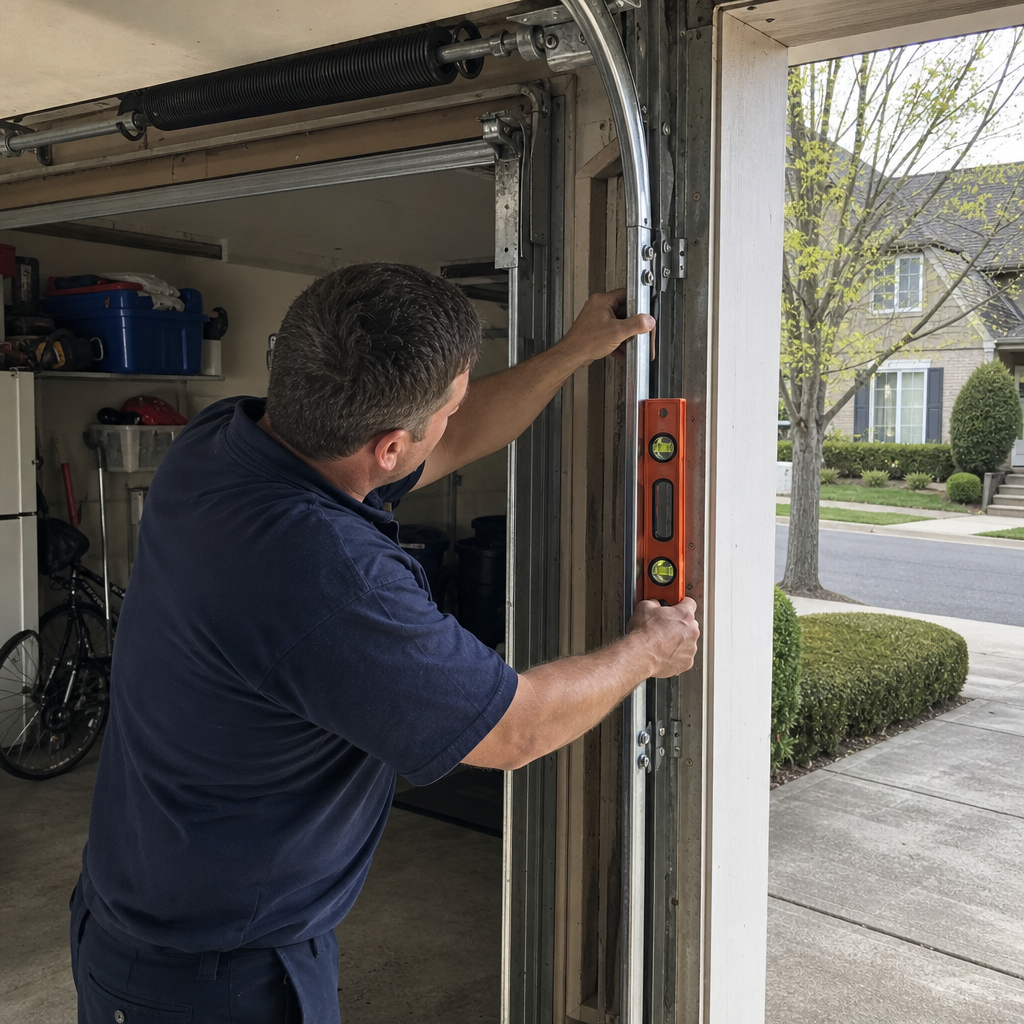
Every month, spend five minutes with your garage door before you drive anywhere. We’ve refined this routine over 17 years and thousands of Atlanta service calls. The problems you’ll spot early are the same ones that become $400–$800 repairs when ignored.
- Disconnect the opener. Pull the red emergency release cord with the door closed. This lets you test the door’s balance and movement without motor interference.
- Lift manually to waist height and release. A properly balanced door stays put or drifts slowly. If it slams down or shoots up, your torsion springs need adjustment — do not attempt this yourself. Torsion springs store lethal tension. This is a trained-technician-only repair.
- Inspect rollers while moving the door. Look for cracked nylon wheels, bent steel rollers, or wobbling movement in the track. In Atlanta’s humidity, nylon rollers degrade faster than in drier climates — we replace more rollers in August than any other month.
- Check cables for fraying or rust. Run your eyes along the full length of both lift cables. Even five broken strands warrant replacement. Cables under tension can snap without warning.
- Listen for grinding, scraping, or popping. New noises are early warnings. Grinding often means dry rollers or misaligned tracks. Popping usually indicates a failing spring.
- Re-engage the opener and test the auto-reverse. Place a 2×4 board flat on the floor where the door meets the ground. The door should reverse within 2 seconds of contact. If it doesn’t, the force setting or safety system needs professional attention.
Document anything unusual with your phone. A 10-second video of a grinding sound gives a technician more diagnostic information than a paragraph of description.
What to Lubricate — and What Never to Touch
Lubrication is where most Atlanta homeowners go wrong. The wrong product in our climate creates problems faster than no lubrication at all.
Use Silicone-Based Lubricant — Period
Atlanta’s humidity destroys standard lithium greases. Silicone-based sprays resist moisture, don’t attract pollen grit, and maintain viscosity across our temperature swings. We stock and service LiftMaster, Chamberlain, and Genie systems — and we recommend silicone lubricant for all of them regardless of brand. Apply a light coat to:
- Hinges at each panel junction
- Roller bearings (not the track itself — never the track)
- Bearing plates and pulleys
- Locking mechanisms on manual doors
Never Lubricate:
- The track. Lubricant here attracts dust and creates a sticky film that actually increases rolling resistance. Clean tracks with a dry cloth only.
- The bottom of the door or weather stripping. Silicone degrades rubber and vinyl stripping over time.
- Torsion springs. While some manufacturers allow light lubrication, the risk of over-application attracting moisture in Atlanta’s humidity outweighs any benefit. Springs are replaceable wear items — budget for them every 7–10 years with normal use.
Safety Note: Torsion springs and lift cables are under extreme tension and can cause serious injury or death if handled improperly. Larry Peterson — Owner and Lead Technician — handles spring and cable work personally on every call. If your inspection reveals spring or cable issues, stop and call a professional. Garage Door Repair in Atlanta covers what we evaluate on every service visit.
Weather Stripping vs. Atlanta’s Red Clay Dust
Here’s an Atlanta-specific problem national checklists never mention: our distinctive red clay soil produces ultrafine dust that infiltrates garages through deteriorated weather stripping, then accumulates in tracks and mechanisms. In 17 years of service from Sandy Springs to College Park, we’ve opened track systems caked with a quarter-inch of clay dust mixed with pollen residue.
Inspecting Your Weather Stripping:
- Close the garage door and examine the bottom seal from inside. Look for cracks, flattening, or gaps where light shows through.
- Check the side and top seals for brittleness or detachment from the door frame. Atlanta’s UV exposure and humidity accelerate rubber degradation — expect 3–5 year lifespan on standard vinyl seals, shorter if your garage faces west.
- Run your hand along the closed door’s edge. You should feel consistent pressure from the seal. Uneven contact means the door is misaligned or the seal is compressed unevenly.
- Look for red dust accumulation inside the garage near the door perimeter — it’s evidence of seal failure.
Replace bottom seals before pollen season begins. A proper seal doesn’t just keep out dust; it reduces the humidity load on everything inside your garage, including the door’s metal components.
Testing Auto-Reverse and Photo-Eye Systems
Federal law has required auto-reverse on garage door openers since 1993, but the law doesn’t maintain your system — you do. In Atlanta’s humid environment, photo-eye sensors fog, misalign, or accumulate pollen coating that blocks the beam.
Monthly Auto-Reverse Test:
Place a solid object at least 1.5 inches tall (a 2×4 on its side works) in the door’s path. Close the door using the wall button — not the remote. The door should reverse within 2 seconds of contact. If it doesn’t, the force limit needs adjustment. Do not attempt to increase force to overcome a sticking door. That’s how injuries happen.
Photo-Eye Alignment Check:
- Locate the two sensors mounted 4–6 inches above the floor on either side of the door track.
- Verify both LED indicator lights are solid (not blinking). Blinking indicates misalignment or obstruction.
- Clean lenses with a dry cloth — never solvent-based cleaners that leave residue.
- Check that sunlight isn’t hitting sensors directly during your typical usage hours. In Atlanta’s intense summer sun, eastern- and western-facing garages sometimes need shade hoods installed.
If the door reverses randomly during normal closing, suspect photo-eye issues first. It’s the most common “false positive” we diagnose on Garage Door Opener in Atlanta service calls.
The Annual Documentation Routine Technicians Wish You’d Keep
Here’s a professional secret: the most valuable diagnostic tool isn’t a fancy meter — it’s your own photo history. When we arrive at an Atlanta home, we can spot a problem in 30 seconds if we can compare current conditions to last year’s state. Without that baseline, we’re guessing at deterioration rates.
Your Annual Documentation Checklist:
- Photograph the torsion spring assembly from directly below, showing the full spring length and mounting hardware. Date the photo. Springs fatigue predictably, but the visual progression reveals whether fatigue is accelerating.
- Photograph both lift cables where they wrap around the bottom drum. Fraying typically starts at the drum contact point.
- Photograph the opener rail and chain/belt from the motor head to the door connection. Sagging or wear patterns show here first.
- Photograph weather stripping at multiple points — bottom seal, side seals, top seal.
- Record the door’s behavior: Does it hesitate at any point? Make noise? Open unevenly? Note the outdoor temperature and humidity — Atlanta’s variable conditions affect performance.
- Store everything in a dated folder (digital or physical) with your garage door’s brand, model, and approximate installation date.
When you call for service, mention that you have documentation. A technician who knows you’re tracking deterioration can focus on trends rather than isolated symptoms. We’ve caught failing Wayne Dalton TorqueMaster systems three years before catastrophic failure because a homeowner in Druid Hills had annual photos showing gradual spring coil separation.
Brand-Specific Maintenance Notes for Atlanta Homes
Different manufacturers design for different climates — and Atlanta’s humidity challenges some systems more than others. After 17 years working with the major brands, here are the Atlanta-specific notes we share with our customers.
Amarr
Amarr’s steel doors with Intellicore insulation perform well in Atlanta’s humidity, but the vinyl-backed models can trap moisture against the interior face if garage ventilation is poor. We stock and service Amarr systems — no learning curve, no guesswork. Check the interior panel surface annually for condensation staining, especially on north-facing garages in neighborhoods like Morningside-Lenox Park where shade keeps garages cooler and damper.
Wayne Dalton
The TorqueMaster spring system (enclosed, tube-mounted springs) is sensitive to humidity-related bearing corrosion. If your Wayne Dalton door develops a rhythmic “click” during opening, the torque tube bearings are likely degrading. This isn’t a DIY fix — the enclosed system requires specialized winding tools. We’ve replaced hundreds of these in Atlanta’s older intown neighborhoods where Wayne Dalton dominated new construction in the 1990s and 2000s.
Craftsman and Raynor
Both brands (Raynor manufactures many Craftsman openers) use chain-drive systems that benefit from semi-annual tension checks in Atlanta’s climate. Heat expansion and humidity can loosen chain sag beyond the manufacturer’s 1/2-inch specification. A loose chain accelerates sprocket wear and creates the distinctive “chain slap” sound we diagnose regularly in East Atlanta and Kirkwood homes.
For new door considerations, Garage Door Installation in Atlanta covers how we match materials to your garage’s specific exposure and ventilation.
Common Mistakes to Avoid
- Using WD-40 as a lubricant. WD-40 is a solvent and water displacer, not a lubricant. In Atlanta’s humidity, it evaporates within days and leaves components unprotected. We’ve seen homeowners apply it monthly, wondering why their door still squeaks.
- Lubricating the track. This is the most repeated error in garage door maintenance. Lubricant on tracks attracts pollen and clay dust, creating an abrasive slurry that destroys rollers. Clean tracks; lubricate moving parts only.
- Ignoring the emergency release. Many Atlanta homeowners have never pulled the red cord. Test it quarterly — if you can’t operate your door manually during a power outage (common during our summer thunderstorms), you’ve got a balance or spring problem already developing.
- Pressure-washing the door. The force drives water into sealed components and behind weather stripping. In Atlanta’s humidity, that trapped moisture accelerates rust and delaminates insulated panels. Use a garden hose and soft brush instead.
- Waiting for total failure. A door that “works” but makes new noises, moves slower, or reverses intermittently is already damaged. The repair cost increases 3–5x when a failing spring snaps or a frayed cable breaks completely.
- Using the wrong lubricant seasonally. That heavy winter grease you brought from Michigan? It’ll liquefy and run in July. That light spray you used in Phoenix? It won’t protect against January freeze events. Match your product to Atlanta’s actual range.
When to Call a Professional
Some maintenance is homeowner-appropriate. Some isn’t — and the line is clearer than you might think.
Call a professional immediately if you observe: a door that won’t stay open at waist height (spring failure risk), visible gaps in torsion springs, more than five broken cable strands, opener motor straining or overheating, or a door that has come off its tracks. These conditions present genuine safety hazards.
Call for scheduled service if: your door is more than 5 years old and has never had professional adjustment, you’re buying a home and want baseline assessment, or you’re transitioning from a generic maintenance approach to this Atlanta-specific calendar.
Sequoia Garage Door Repair Georgia offers free estimates in Atlanta — call (844) 950-3304. Larry Peterson — Owner and Lead Technician — handles your job personally, not a subcontractor dispatched from a call center. When your garage door won’t move, we show up — that’s what emergency service means.
Frequently Asked Questions
Monthly visual inspections, seasonal deep maintenance aligned with pollen/humidity/freeze cycles, and annual professional assessment. Atlanta’s climate demands more frequent attention than drier or more temperate regions — the combination of pollen, humidity, and temperature swings compresses wear into specific seasonal windows. Call (844) 950-3304 to schedule your annual assessment — estimates are free.
Silicone-based spray lubricant rated for high-humidity environments. Standard lithium greases break down and attract moisture in Atlanta’s summer conditions. We apply silicone-based products on every maintenance call, regardless of door brand. Avoid water-based lubricants entirely — they gel during our occasional freeze events.
Pine pollen mixes with morning dew on tracks and components, creating an abrasive film that increases friction and accelerates wear. The noise typically peaks 2–4 weeks after pollen counts spike. Wipe tracks weekly with a dry cloth during pollen season, and verify your lubricant hasn’t attracted a pollen-grit mixture that needs cleaning off.
No. Torsion springs store lethal tension and require specialized winding tools and training. Improper handling causes serious injury or death — this isn’t an exaggeration. In 17 years, we’ve seen the aftermath of DIY spring attempts in Atlanta emergency rooms. Larry Peterson handles all spring work personally, with the proper tools and safety protocols. Call (844) 950-3304 for same-day spring assessment.
15–30 years for the door itself, depending on material and exposure. Steel doors with proper maintenance last 20+ years even in Atlanta’s humidity. Openers typically need replacement at 10–15 years. Springs are wear items: 7–10 years with normal residential use, shorter with heavy use or poor maintenance. The red clay dust and humidity combination means Atlanta doors often need earlier roller and weather stripping replacement than national averages suggest.
Clear vehicles and storage from the garage door area, ensure adequate lighting, and gather any documentation of past service or your annual photo records. Note the specific symptoms — when they occur, what the weather was, any recent changes in door behavior. The more context you provide, the faster we diagnose. Nearly 300 five-star reviews from real homeowners reflect our commitment to efficient, thorough service.
The Bottom Line
Atlanta’s garage doors fail on Atlanta’s schedule — not a generic calendar from a national website. Match your maintenance to pollen season, humidity peaks, temperature swings, and freeze events. Use silicone-based lubricant, never lubricate tracks, inspect weather stripping for red clay infiltration, and document annually. The five-minute monthly inspection catches most problems before they become emergency calls. When problems exceed your comfort zone, professional service is a phone call away — and with an owner-operated specialist, you get accountability by name, not a rotating subcontractor.
Ready to protect your garage door with maintenance matched to Atlanta’s actual conditions? Call Sequoia Garage Door Repair Georgia at (844) 950-3304 for a free estimate. Whether you need a seasonal tune-up, emergency repair, or professional assessment of a door that’s showing its age, Larry Peterson — Owner and Lead Technician — brings 17 years of hands-on experience with the brands already in your garage.
Written by Larry Peterson, Owner & Lead Technician at Sequoia Garage Door Repair Georgia, serving Atlanta since 2009.