
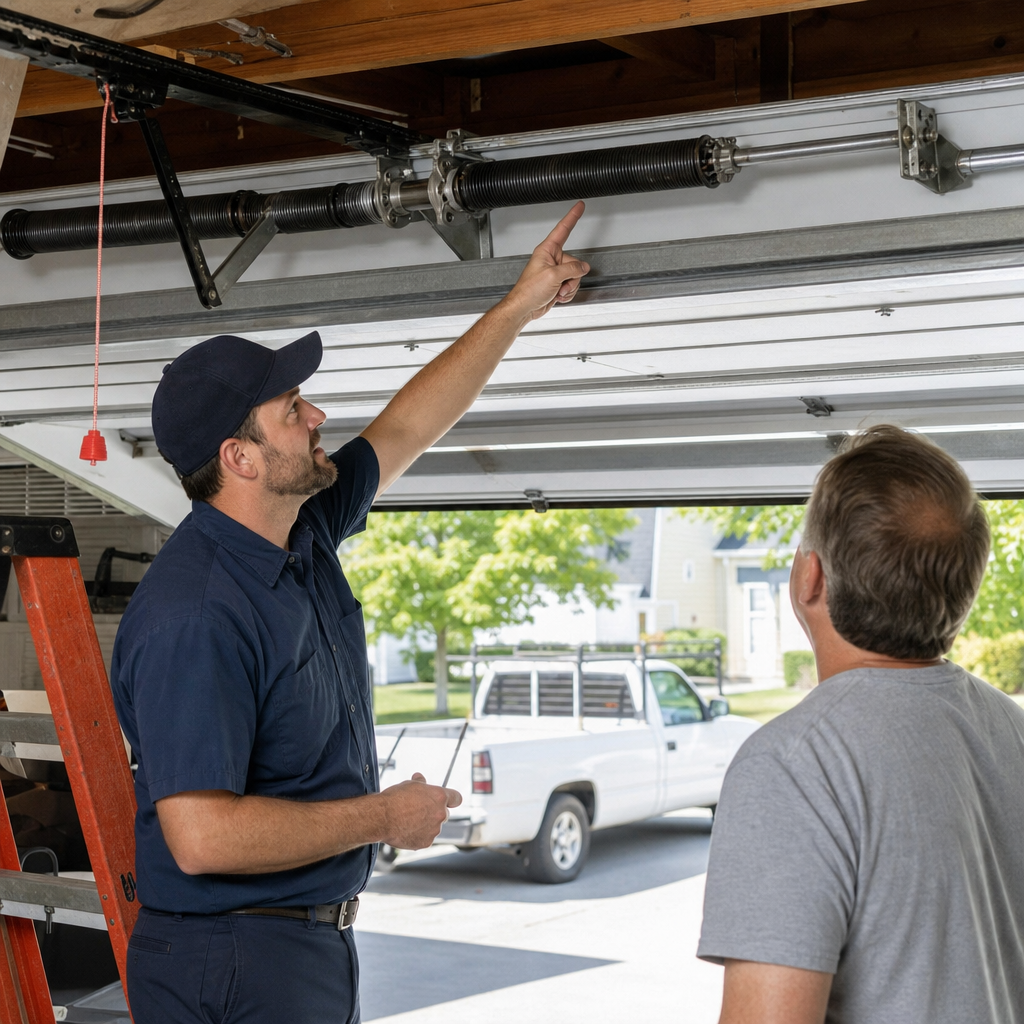
Why Your Garage Door Won’t Close in Georgia — And What That Flashing Light Is Trying to Tell You
If your garage door won’t close, the most common cause is misaligned or blocked safety sensors, though a flashing light on your opener unit often reveals the exact problem within seconds. Most Garage Door Repair jobs in Georgia run between $150 and $600 depending on whether you’re looking at a sensor adjustment, opener logic reset, or mechanical fix. Call Sequoia Garage Door Repair Georgia at (844) 950-3304 for a free diagnosis — we’ll walk you through the blink code over the phone before we even dispatch.
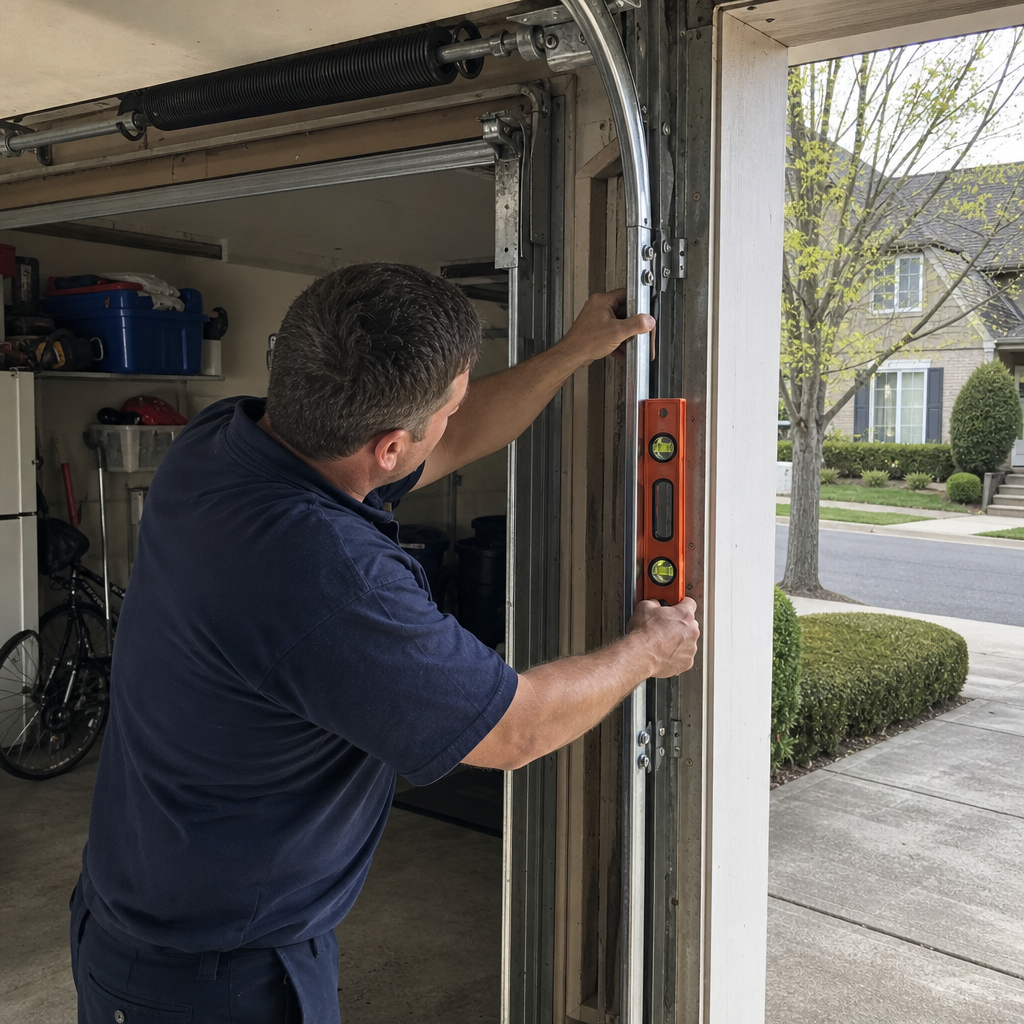
Georgia’s Climate Sets Up These Failures Differently
After 17 years on job sites from Decatur to Stone Mountain, we’ve learned that garage doors in Georgia fail in patterns you won’t see in drier climates. Our summer humidity swells wooden door frames and shifts sensor brackets. Afternoon thunderstorms deliver power surges that corrupt opener logic boards — we’ve replaced more control boards the morning after a lightning storm than we can count. And the red clay that defines so much of Georgia’s soil? It tracks into garages on tires and boots, coating sensor lenses with a film that’s invisible until your door refuses to close at 10 PM.
Larry Peterson — Owner and Lead Technician at Sequoia Garage Door Repair Georgia — grew up in Decatur and learned the trade from his father, who ran a small handyman operation where reliable work was the only advertisement that mattered. That background shapes how we approach every “won’t close” call: diagnose first, explain honestly, fix only what needs fixing.
The One Question That Solves 80% of “Won’t Close” Calls
Before Larry pulls a single tool from his truck, he asks: “Is the light on the opener flashing, and how many times?”
That blink count is a diagnostic language every major manufacturer built into their systems — and almost no homeowner knows it exists. Here’s what those patterns mean for the brands we see most often in Georgia homes:
- LiftMaster / Chamberlain (1 blink): Safety sensor wire is disconnected or shorted. Check the white and white/black wires at the back of the opener head.
- LiftMaster / Chamberlain (2 blinks): Sensor alignment issue. The receiving eye isn’t seeing the beam from the sending eye — often from vibration, humidity-swollen framing, or a kid’s bicycle handlebar.
- Genie (1 blink + pause): Sensor obstruction or misalignment. Genie’s pattern is slower — count the pauses carefully.
- Craftsman (varies by model year): Pre-2012 units flash continuously for sensor faults; newer models adopted the LiftMaster blink-count system after Chamberlain acquired the brand.
If your opener isn’t flashing at all when you press the button, you’ve branched into a different diagnostic tree entirely — usually power, logic board, or manual disconnect. We’ll cover all three branches below.
Three Completely Different Problems, One Symptom
A garage door that won’t close is actually three distinct failure modes wearing the same mask. The blink code (or its absence) tells you which branch you’re on.
Branch 1: Door Starts Down Then Reverses
This is the sensor branch — or occasionally a mechanical binding issue. The opener’s safety logic detects an obstruction (real or perceived) and reverses travel. In Georgia’s older neighborhoods like Candler Park or Virginia-Highland, we’ve seen decades of settling cause the door to rub against the frame at a specific point in its travel, triggering the force sensor.
What to check safely: Clean both sensor lenses with a dry cloth — no chemicals, which can leave a residue. Verify both sensor LEDs are lit solid (not flickering). Check for spider webs, which love the sheltered, warm environment above Georgia garage doors. If one LED is out or flickering, loosen the bracket wingnut, adjust until both eyes glow steady, then retighten.
When to call: If both LEDs are solid and the door still reverses, you’re likely looking at a force adjustment or track realignment — both of which we handle as part of our standard Garage Door Repair in Georgia service. Track realalignment runs $120–$240; sensor replacement if needed falls within our standard repair range.
Branch 2: Opener Hums But Door Doesn’t Move
The motor runs, the light comes on, but the door sits there. This almost always means the opener is engaged but the door is disconnected from the drive system — check whether the emergency release cord has been pulled (red handle, usually hanging from the trolley). In Georgia, we’ve seen this happen after power outages when homeowners manually operate the door and forget to re-engage the trolley.
Less commonly, the travel limits have been corrupted — often by the power surges that follow our frequent thunderstorms. A lightning strike three blocks away can induce enough current to scramble a logic board’s memory without tripping your breaker. If your door was closing fine yesterday and won’t move today after overnight storms, this is your likely culprit.
What to check safely: Re-engage the trolley by pulling the release cord toward the opener (not straight down) while the door is closed. Test the wall button — if the door moves manually but not via opener, the disconnect was your issue.
When to call: If re-engaging doesn’t work, or if the door moves a few inches and stops, you’re looking at limit reprogramming or logic board diagnostics. Opener repair runs $120–$320; opener installation if the board is fried starts at $250–$550 for a quality replacement unit.
Branch 3: Nothing Happens — No Sound, No Light, No Movement
This is the power/logic branch. Check your GFCI outlet (garage outlets are often chained to bathroom or exterior GFCI circuits that trip in wet weather). Check the breaker. If those are good, unplug the opener for 30 seconds to force a hard reset — Georgia’s grid fluctuations can lock logic boards in a confused state.
Here’s a diagnostic that saves homeowners from unnecessary service calls: Test the wall button against the remote. If the wall button closes the door but the remote doesn’t, you’ve narrowed the fault to either the remote battery (about $30 at any hardware store) or the opener’s receiver board. If neither works, the problem is upstream — power supply or main logic board. We’ve talked many Georgia homeowners through this test by phone, and we’d rather save you a trip charge for a dead battery than show up to hand you one.
What Georgia Homeowners Can Check — And Where the Line Is
We’re straight about this because Larry’s seen what happens when enthusiasm outpaces caution. Here’s the honest boundary:
| DIY-Safe Checks | Call a Trained Technician |
|---|---|
| Sensor lens cleaning and alignment | Spring tension adjustment or replacement |
| Blink code lookup and interpretation | Sensor bypass or “jumper” wiring |
| Manual disconnect test and re-engagement | Track bending or forced realignment |
| Remote battery replacement | Opener logic board soldering |
| GFCI and breaker verification | Anything involving the torsion spring assembly |
That last point deserves emphasis: garage door springs store lethal tension. A standard torsion spring on a double-wide door holds enough energy to cause serious injury or death if mishandled. We’ve arrived at jobs where a homeowner’s “quick adjustment” with a winding bar from the hardware store bent the shaft and launched tools across the garage. Don’t be that story. Spring repair — $180–$340 in our Georgia market — is simply not worth the risk of self-inflicted injury.
When Georgia’s Weather Is the Real Culprit
Our local thunderstorm pattern creates a specific failure signature we see every spring and summer. A surge doesn’t always kill the opener outright — sometimes it partially corrupts the travel limits, so the door closes to what the opener thinks is the floor but is actually six inches above it. Or it scrambles the force sensitivity, making the opener perceive normal resistance as an obstruction.
After major storms, we get clusters of calls from specific neighborhoods — often areas with older infrastructure like parts of East Atlanta or the historic districts of Decatur where grounding isn’t what modern codes require. If your “won’t close” issue appeared suddenly after weather, mention it when you call. It speeds diagnosis considerably.
We stock and service LiftMaster, Chamberlain, and Genie systems — no learning curve, no guesswork — and we carry common logic boards and limit switches on the truck for brands we’ve worked with across our 17 years in the trade.
What Repair Actually Costs in Georgia
Here’s our current pricing for the repairs most commonly needed when a door won’t close:
| Repair Type | Price Range |
|---|---|
| Sensor adjustment or replacement | $150–$250 |
| Track realignment | $120–$240 |
| Opener repair (logic board, limits, receiver) | $120–$320 |
| Spring repair (if binding caused opener strain) | $180–$340 |
| Cable repair (if door is off-track) | $130–$250 |
| Opener installation (if board unrepairable) | $250–$550 |
Every estimate we provide is free and itemized. Larry Peterson handles the assessment personally — no commissioned sales tech, no upsell pressure. Our 4.8-star rating as the Best Garage Door Repair in Georgia, GA across 296 verified reviews reflects that approach: quote what the job needs, fix it right, move on.
Key Takeaways
- Count the flashes on your opener — it’s a coded diagnostic that reveals the problem category instantly
- Georgia’s humidity and thunderstorm surges cause specific failure patterns you won’t see in dryer climates
- The wall-button-vs-remote test can save you a service call for a simple battery issue
- Sensor cleaning and alignment are homeowner-safe; spring and cable work absolutely are not
- Sudden onset after storms strongly suggests power-related logic corruption, not mechanical wear
FAQs
Most repairs run $150–$600, with sensor issues at the lower end ($150–$250) and opener logic board replacement toward the upper end ($250–$550 if full replacement is needed). We provide free, itemized estimates before any work begins — call (844) 950-3304 for exact pricing on your specific setup.
This almost always means the opener itself is healthy and the problem is isolated to either the remote battery, the remote’s signal transmission, or the opener’s receiver board. Try a fresh battery first — it’s a $30 fix versus a service call. If a new battery doesn’t solve it, the receiver board likely needs diagnosis; we see this frequently after Georgia’s power surges.
You can safely try sensor cleaning, alignment checks, the manual disconnect re-engagement, and remote battery replacement — these are low-risk and often solve the problem. Never attempt spring adjustment, sensor bypass wiring, or forced track bending; these carry serious injury risk and should be handled by a trained technician. If your door has torsion springs, call a pro regardless of how “simple” the online tutorial looks.
We offer Emergency Garage Door Repair in Georgia, GA for urgent situations — a door that won’t close leaves your home exposed and your routine disrupted. When your garage door won’t move, we show up — that’s what emergency service means. Call (844) 950-3304 and we’ll give you a realistic arrival window based on current job locations; Larry Peterson handles the dispatch personally, so you’re talking to the person who will actually do the work.
When You’re Ready to Get It Fixed Right
A garage door either works right or it doesn’t — let’s make sure yours does. If you’ve checked the basics and the problem persists, or if you’d rather not troubleshoot alone, Sequoia Garage Door Repair Georgia offers a no-pressure assessment anywhere in our Georgia service area. Larry Peterson — Owner and Lead Technician — handles your job personally, bringing 17 years of hands-on experience with the brands already in your garage. Call (844) 950-3304 for a free estimate.
Written by Larry Peterson, Owner & Lead Technician at Sequoia Garage Door Repair Georgia, serving Georgia, GA.