
Why Does My Garage Door Reverse in Georgia? The Five Causes Behind the Most Misdiagnosed Garage Door Problem
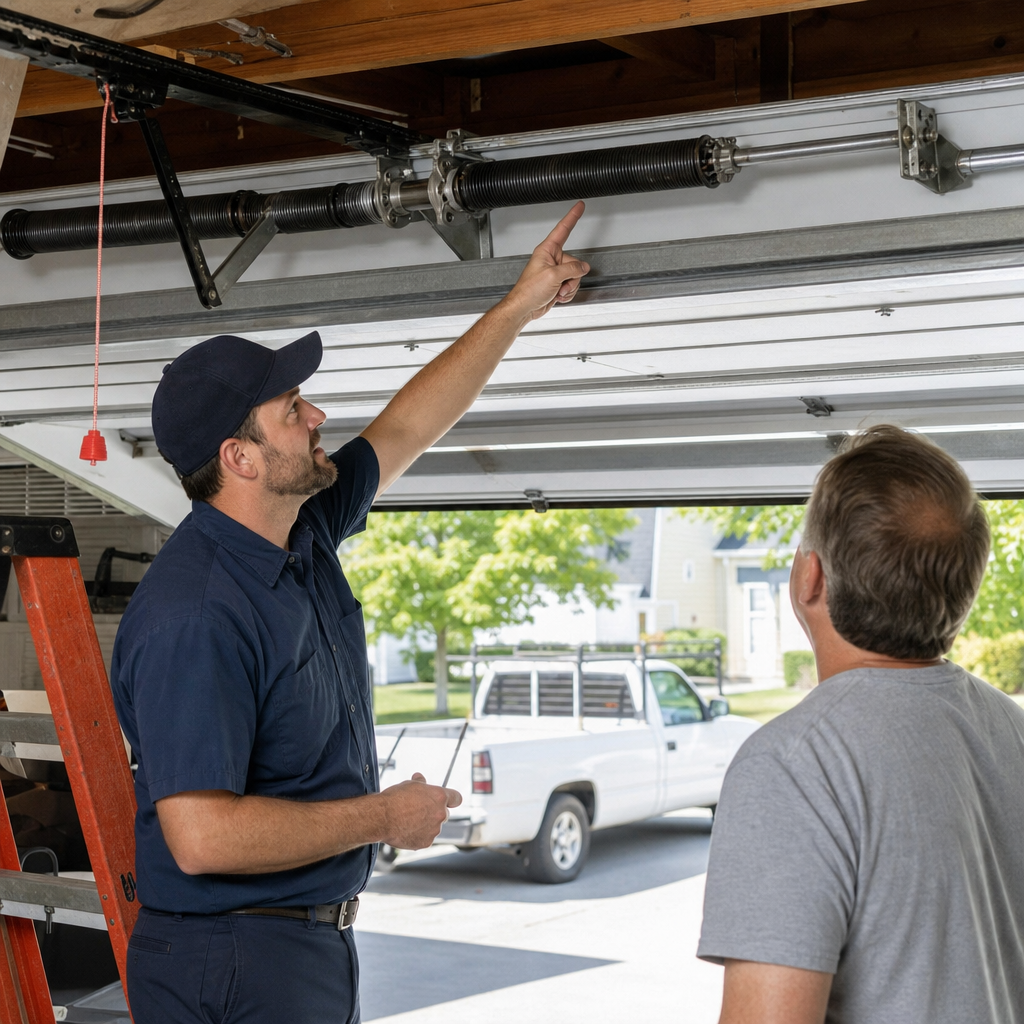
A garage door that reverses before hitting the ground is almost always one of five problems — and four of them have nothing to do with the opener’s sensitivity dial. In Georgia’s pollen-heavy climate, the most common culprit is a photo-eye sensor coated with yellow spring pollen or a bracket knocked loose by routine driveway bumps, not a failing motor. If you’re standing in your garage pressing the wall button over and over, the fix might be simpler than you think — and if it’s not, Garage Door Repair from a trained technician runs $150–$600 depending on what’s actually wrong. Call Sequoia Garage Door Repair Georgia at (844) 950-3304 for a free, no-pressure diagnosis.
The Reversal Button-Push That Fixes Nothing
We’ve lost count of how many Georgia homeowners tell us the same story: the door starts down, reverses for no clear reason, and they spend forty-five minutes in the garage with a screwdriver, cranking the opener’s force settings up and down while the door keeps behaving exactly the same way. The opener’s logic board doesn’t care about your frustration. It’s receiving a signal — either real or false — that something is in the door’s path, and it’s doing precisely what it was engineered to do.
The problem is that five distinct failures produce this identical behavior, and treating them all as “sensitivity issues” wastes time and sometimes makes things worse. Here’s how we diagnose reversal calls across Georgia, from Decatur to Stone Mountain to the newer subdivisions off 285, where we’ve noticed a pattern: the faster we can separate mechanical failure from sensor problems, the faster the door actually stays closed.
Cause 1: Photo-Eye Misalignment — The Bracket Problem
Every automatic garage door installed after 1993 has two photo-eye sensors, one on each side of the door track, about six inches off the ground. They shoot an invisible infrared beam across the opening. Break that beam, and the door reverses. Simple enough — except the brackets holding these sensors are surprisingly easy to knock crooked.
In Georgia’s older neighborhoods, we see this constantly. A basketball hits the bracket. A trash can gets pushed against it. The vibration of the door itself slowly works the wing nut loose over months. Once one sensor points even slightly away from the other, the beam misses its target. The opener “sees” a broken beam and reverses the door.
The diagnostic clue: the door reverses immediately upon starting down, often within the first foot of travel. It doesn’t hesitate partway — it acts like it hit a wall that isn’t there.
Here’s the two-sensor test Larry Peterson — Owner and Lead Technician at Sequoia Garage Door Repair Georgia — walks homeowners through before we ever roll a truck:
- Stand inside the garage with the door open and the opener disengaged (pull the red release cord)
- Have someone press the wall button to start the door closing
- Wave your foot through the beam path — the door should reverse
- Now block just the left sensor with your hand. The door should not move, or should reverse if already moving
- Repeat with just the right sensor blocked
- If blocking either sensor individually doesn’t stop or reverse the door, that sensor’s beam isn’t reaching its partner — alignment issue, not a sensitivity issue
This test takes thirty seconds and tells us whether we’re dealing with brackets or something deeper. We explain it on every reversal call because it saves homeowners a service fee for a two-minute wing-nut adjustment they could handle themselves.
Cause 2: Sensor Lens Obstruction — Georgia’s Pollen Factor
This is the one our competitors’ articles miss entirely, and it’s the single most common reversal cause we see in Georgia from March through May and again in September.
Georgia’s spring pollen season doesn’t just coat your car. That fine yellow film settles on photo-eye lenses and scatters the infrared beam without fully blocking it. The result is intermittent, maddening behavior: the door closes fine three times, reverses on the fourth, works again on the fifth. Homeowners interpret this as an electrical fault, a failing logic board, or “the opener’s going bad.” It’s none of those. It’s pollen.
We’ve diagnosed this exact pattern in garages from Decatur to the subdivisions near Stone Mountain Park, where oak and pine pollen counts spike well into the thousands. The lens looks clean to the eye — the film is thin enough to seem transparent — but infrared light scatters off it differently than visible light does.
The fix is embarrassingly simple: wipe both lenses with a clean, dry microfiber cloth. No cleaner needed — residue from glass cleaner can actually make it worse. Check the cloth afterward; if it’s yellow, you’ve found your culprit. In heavy pollen weeks, this is maintenance, not repair.
Fall brings a second, lighter pollen wave plus leaf debris that accumulates around sensor brackets. We keep a can of compressed air on the truck specifically for blowing out spider webs and leaf litter from sensor housings — it’s that routine a fix.
Cause 3: Faulty Close-Limit Setting — The Travel Distance Problem
The opener’s limit switches tell it how far the door should travel to reach the floor. When the close limit is set too far, the opener tries to drive the door past its physical stopping point. The motor detects resistance, interprets it as an obstruction, and reverses.
The diagnostic clue: the door reverses only after traveling most or all of the way down, often hitting the floor first or nearly so. Unlike the immediate reversal of a photo-eye problem, this one happens late in the cycle.
Limit settings drift over time. Temperature swings in Georgia — 85 degrees one March afternoon, 45 that same night — cause metal components to expand and contract. After years of this, the opener’s programmed travel distance no longer matches the door’s actual travel. We see this especially on older LiftMaster and Chamberlain chain-drive units that have been cycling for a decade or more.
Adjusting limits requires accessing the opener’s control panel — usually a screwdriver or small button sequence on the motor housing. We don’t walk homeowners through this over the phone because misadjusted limits can cause the door to close too hard, damaging the bottom seal or worse. It’s a quick service call, typically $120–$240 in our Garage Door Off Track Repair in Georgia, GA range, and it includes verifying the force settings while we’re there.
Cause 4: Force Setting Too Sensitive — Or Not Sensitive Enough
Here’s where the screwdriver-wielding homeowner usually starts, and usually shouldn’t. The opener’s force setting controls how much resistance triggers reversal. Too sensitive, and normal door friction causes reversal. Too insensitive, and the door won’t reverse when it genuinely should — a safety hazard, especially with children or pets.
The diagnostic clue: the door reverses partway down, often at the same point in travel each time, suggesting a sticky spot in the door’s movement rather than a sensor issue. Or, conversely, the door doesn’t reverse when you deliberately test it by placing a 2×4 on the floor in its path — indicating the force setting is dangerously high.
Georgia’s humidity complicates this. Swollen wooden door sections, rusted rollers, and debris in tracks all increase rolling resistance. The opener feels this drag and reverses, correctly identifying that something is wrong — but the “something” is the door’s mechanical condition, not an obstruction. Adjusting the force setting higher masks the real problem: worn rollers, a bent track, or an out-of-balance door that needs spring adjustment.
We see this misdiagnosis constantly. Homeowner cranks the force setting up, door “works” for two weeks, then the added strain burns out the opener’s motor or snaps a weakened spring. The $150–$600 repair becomes a $700–$2,200 door replacement. A garage door either works right or it doesn’t — let’s make sure yours does.
Cause 5: Logic Board Failure — When the Brain Misfires
Less common but real: the opener’s logic board receives phantom signals or fails to process real ones correctly. Symptoms include reversal at random points in travel, inconsistent response to remote and wall buttons, or lights flashing in patterns that don’t match any documented error code.
Logic boards fail from electrical surges — common during Georgia’s summer thunderstorm season — or simply from age. Capacitors degrade. Solder joints crack from vibration. We carry diagnostic tools to test signal integrity on Genie, LiftMaster, Chamberlain, and Raynor systems, and we stock replacement boards for common models because a logic board swap is typically cheaper than full opener replacement.
Opener repair runs $120–$320; full opener installation is $250–$550. We quote both options honestly when the board is questionable, because some openers at twelve-plus years aren’t worth the board investment.
When Reversal Is the Feature Working Correctly — Not a Bug
This is the detail that separates technicians who understand garage door systems from ones who just swap parts.
Sometimes the door reverses because it should — because it’s detecting legitimate resistance from an out-of-balance spring or a binding track. The opener’s force sensor is doing its job, protecting the motor and the door from damage. Chasing the reversal symptom without fixing the underlying mechanical problem leads to repeat service calls, frustrated homeowners, and eventually a burned-out opener.
In Georgia’s older housing stock — the ranch-style homes built from the 1960s through 1980s that dominate neighborhoods near Decatur — original torsion springs often last fifteen to twenty years. When they start losing tension, the door becomes heavier on one side. The opener strains, the force sensor triggers, and the door reverses. Adjust the force setting higher, and you’re asking a 1/2-horsepower motor to lift a door that a failing spring is no longer balancing. The motor overheats. The gear strips. Now you need a motor and a spring.
Spring repair runs $180–$340. Opener repair or replacement adds $120–$550 on top. Catching the spring problem when the door first starts reversing saves the difference.
We check spring balance on every reversal call, even when the homeowner is convinced it’s “just the opener.” It’s fifteen seconds with a winding bar and a scale, and it’s caught hundreds of incipient spring failures before they became emergency calls.
Key Takeaways: Diagnosing Your Reversing Door
- Immediate reversal (within first foot): Check photo-eye alignment and lens cleanliness first — especially in Georgia pollen season
- Late reversal (near or at floor): Likely limit switch drift, common on older units after years of temperature cycling
- Reversal at same mid-point every time: Mechanical resistance from worn rollers, bent track, or failing spring — don’t mask with force settings
- Random, inconsistent reversal: Possible logic board issue, often after electrical storms; needs professional diagnosis
- Yellow film on sensor lenses: Georgia-specific pollen problem; clean with dry microfiber, not glass cleaner
What Sequoia Garage Door Repair Georgia Checks on Every Reversal Call
When Larry Peterson arrives at a Georgia home for a reversing door, the inspection follows a sequence we’ve refined over 17 years:
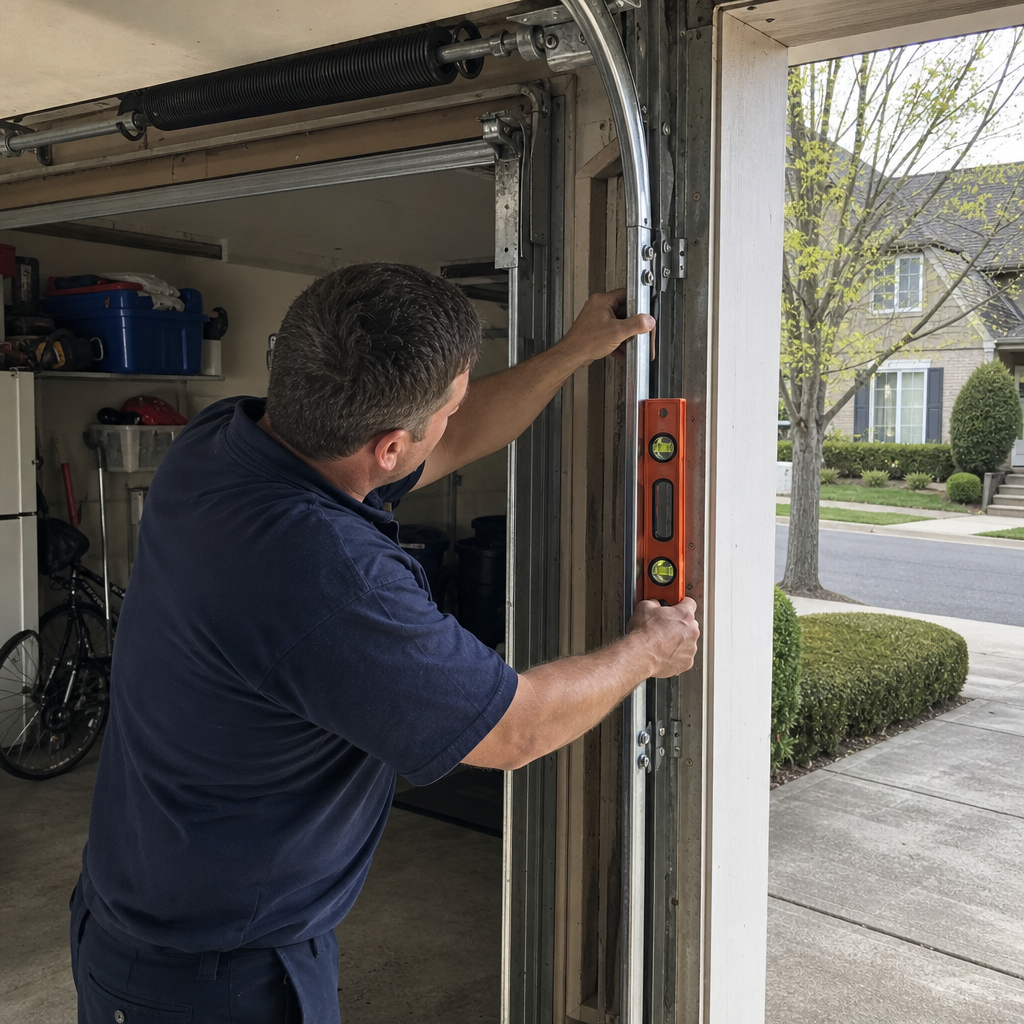
First, the two-sensor test. Brackets, lenses, wiring integrity. Then spring balance — we disconnect the opener and lift the door manually, feeling for heavy spots or binding. Track alignment with a level. Roller condition and lubrication status. Only then do we touch opener settings, and only after confirming the door itself is mechanically sound.
This is the difference between owner-operated service and a franchise dispatch. Larry is the one on your driveway, accountable by name, with 296 verified reviews averaging 4.8 stars reflecting that consistency. He’s factory-familiar with LiftMaster, Chamberlain, Genie, Clopay, Amarr, Wayne Dalton, Craftsman, and Raynor — no learning curve on whatever’s in your garage. And when a door genuinely won’t stay closed at 10 PM, our Emergency Garage Door Repair in Georgia, GA means we show up, not a voicemail prompt.
FAQs
Your garage door reverses with no visible obstruction because the opener is detecting a signal of obstruction, not necessarily a physical object — most commonly a misaligned or dirty photo-eye sensor, especially during Georgia’s heavy pollen seasons. Check both sensor lenses for yellow pollen film and verify the brackets haven’t been bumped loose; if the door still reverses after cleaning and alignment, the issue may be limit switch drift or force setting misconfiguration, and a technician can diagnose which in minutes. Call Best Garage Door Repair in Georgia, GA at (844) 950-3304 for a free estimate — we’ll tell you if it’s a thirty-second fix you can handle yourself.
Garage door reversal repair in Georgia typically runs $150–$600 depending on the actual cause, with most sensor alignment and adjustment calls falling in the lower half of that range and logic board or spring-related repairs toward the higher end. Here’s how common reversal fixes break down:
| Service | Price Range |
|---|---|
| Track Realignment / Sensor Adjustment | $120–$240 |
| Spring Repair (if imbalance is cause) | $180–$340 |
| Opener Repair (logic board, limit switches) | $120–$320 |
| Full Opener Replacement | $250–$550 |
| Comprehensive Reversal Diagnosis & Repair | $150–$600 |
We quote upfront before any work begins — no surprises, no upselling parts that can wait. Call (844) 950-3304 for an exact quote on your specific situation.
You can safely fix a reversing garage door yourself if the cause is pollen-coated photo-eye lenses or a slightly loose sensor bracket — wipe lenses with a dry microfiber cloth and hand-tighten bracket wing nuts, no tools needed. However, if the door still reverses after this basic check, or if you’re tempted to adjust spring tension, force settings, or limit switches, call a professional — these adjustments involve genuine safety risks, including high-tension springs that can cause serious injury without proper training and equipment. Sequoia Garage Door Repair Georgia offers free estimates, so there’s no cost to know what’s actually wrong before you decide how to proceed — call (844) 950-3304.
Intermittent reversal — working fine several times, then reversing unpredictably — is the classic signature of a photo-eye sensor with a partially blocked or scattered beam, and in Georgia, spring and fall pollen is the most common culprit. The fine yellow film doesn’t fully block the infrared beam; it scatters it just enough to weaken the signal intermittently, especially as temperature and humidity shift the lens surface throughout the day. Clean both lenses thoroughly with a dry cloth and monitor for a few days; if the pattern continues, the sensor wiring or logic board may have a developing fault that needs professional diagnosis. Call Sequoia Garage Door Repair Georgia at (844) 950-3304 — we’ll confirm whether it’s environmental or electrical.
If you’d rather have it looked at, Sequoia Garage Door Repair Georgia offers a no-pressure assessment in Georgia — call (844) 950-3304.
Written by Larry Peterson, Owner & Lead Technician at Sequoia Garage Door Repair Georgia, serving Georgia, GA.